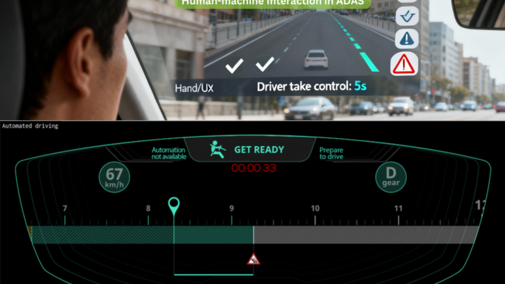
Human–Automation Interaction and Personalized Shared Control in Automated Driving Systems (ADS)
Building on shared control strategies, this research is advancing toward personalized shared-control models that capture individual differences in takeover strategies and predict how drivers with different cognitive and behavioral profiles regain manual control after ADS disengagement. The study incorporates virtual-reality environments and field testing to evaluate ADS behavior under naturalistic and mixed-reality conditions to strengthen the foundation for human–automation collaboration, cognitive modeling, and safety-critical system design.
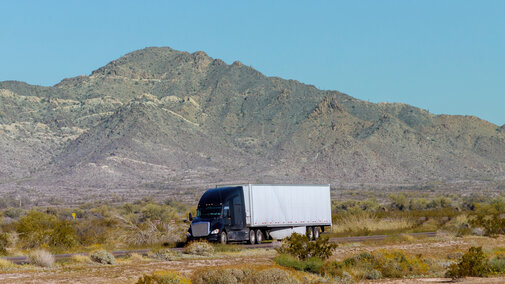
Safe Driving of Commercial Motor Vehicles and Truck–Vulnerable Road User (VRU) Interactions
This research examines how truck drivers perceive hazards, manage workload, and respond to visibility limitations and unexpected conflicts in both urban and rural environments. The work integrates simulator experiments, sensor-based monitoring, and operational data from heavy-vehicle fleets to analyze distraction, decision-making, and control behavior under safety-critical conditions. This area also includes truck–VRU conflict modeling using mixed-reality and scenario-based testing in a truck simulator platform.

Driver Behavior Effects on Traffic Flow, Capacity, and Operations in Uninterrupted-Flow Facilities
This research area focuses on how individual driver behaviors, such as perception–reaction time, car-following tendencies, lane-change decisions, and responses to roadway geometry, shape macroscopic outcomes, including traffic flow stability, capacity, and level of service. The research develops approaches that link observed behavioral heterogeneity to flow breakdown mechanisms, operational reliability, and performance sensitivity under varying demand and geometric conditions. The area also includes assessing how automation-induced changes in driver behavior affect system-level performance.
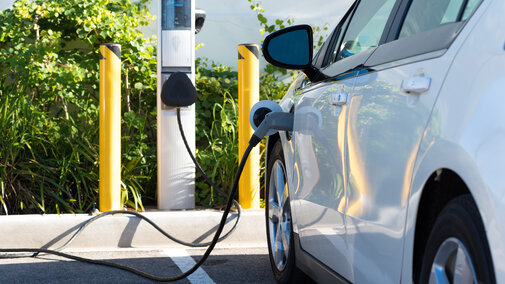
Electric Vehicle Infrastructure, User Behavior, and Socially Informed Transportation Systems
This line of research examines how drivers adopt and use EV infrastructure, how charging availability and cost influence behavior, and how EV benefits and burdens are distributed across communities. This research is expanded toward behavioral modeling and planning applications that incorporate user sentiment, charging-station usage patterns, and community-level barriers to EV adoption. This area also supports collaborations with urban planning, data science, and policy researchers, and contributes directly to sustainable mobility, energy-transition readiness, and equitable technology deployment.
Development of Accurate and Reliable Average Annual Daily Traffic (AADT) Factoring Methods
Nebraska Department of Transportation
According to the Federal Highway Administration (FHWA), “Annual Average Daily Traffic (AADT) estimates, with as little bias as possible, the mean traffic volume across all days for a year for a given location along a roadway”. AADT provides crucial information about road activity in terms of vehicular volume (i.e., vehicles per day) on specific road segments. As such, it plays a pivotal role in supporting highway agency activities that include planning, design, maintenance, operations, safety, environmental analysis, finance, engineering economics, and performance management. Moreover, AADT serves as a key parameter for the allocation of funds to state Departments of Transportation (DOTs).
Nebraska DOT (NDOT) is required to collect and report AADTs to the FHWA annually as part of the Highway Performance Monitoring System program, as well as make these data publicly available. This is because AADTs are used by a wide range of stakeholders in Nebraska, including NDOT divisions, city traffic engineers, and private consultants. Therefore, providing accurate AADTs is imperative, while using inaccurate AADTs in one or more of the mentioned studies would result in direct economic losses for the state.